+86-15916242887


News

Balanced to Unbalanced RF Balun Design and Application in Microwave Circuits
2026-03-25
Balanced to Unbalanced Rf Balun Design and Application in Microwave Circuits
In microwave and RF circuit design, the transition between balanced and unbalanced signals is a critical function that ensures signal integrity, impedance matching, and reduced interference. A Balanced to Unbalanced Rf Balun (often abbreviated as B/U balun) serves as a bridge between balanced transmission lines, such as twinlead or microstrip lines with differential configurations, and unbalanced circuits, typically grounded systems like singleended amplifiers or antennas. The design and application of such baluns are essential in various highfrequency systems, including RF transceivers, power amplifiers, mixers, and filters, where maintaining signal symmetry and minimizing commonmode noise are paramount.
The fundamental role of a balun is to convert a balanced signal into an unbalanced one, or vice versa, while preserving the signal’s amplitude and phase characteristics. In a balanced to unbalanced configuration, the balun must ensure that the differential signal is properly transformed into a singleended signal without introducing significant commonmode components. This is crucial because commonmode signals can cause radiation, crosstalk, and signal degradation, especially in highfrequency applications. The performance of a balun is often evaluated based on its commonmode rejection ratio (CMRR), insertion loss, return loss, and impedance matching capabilities.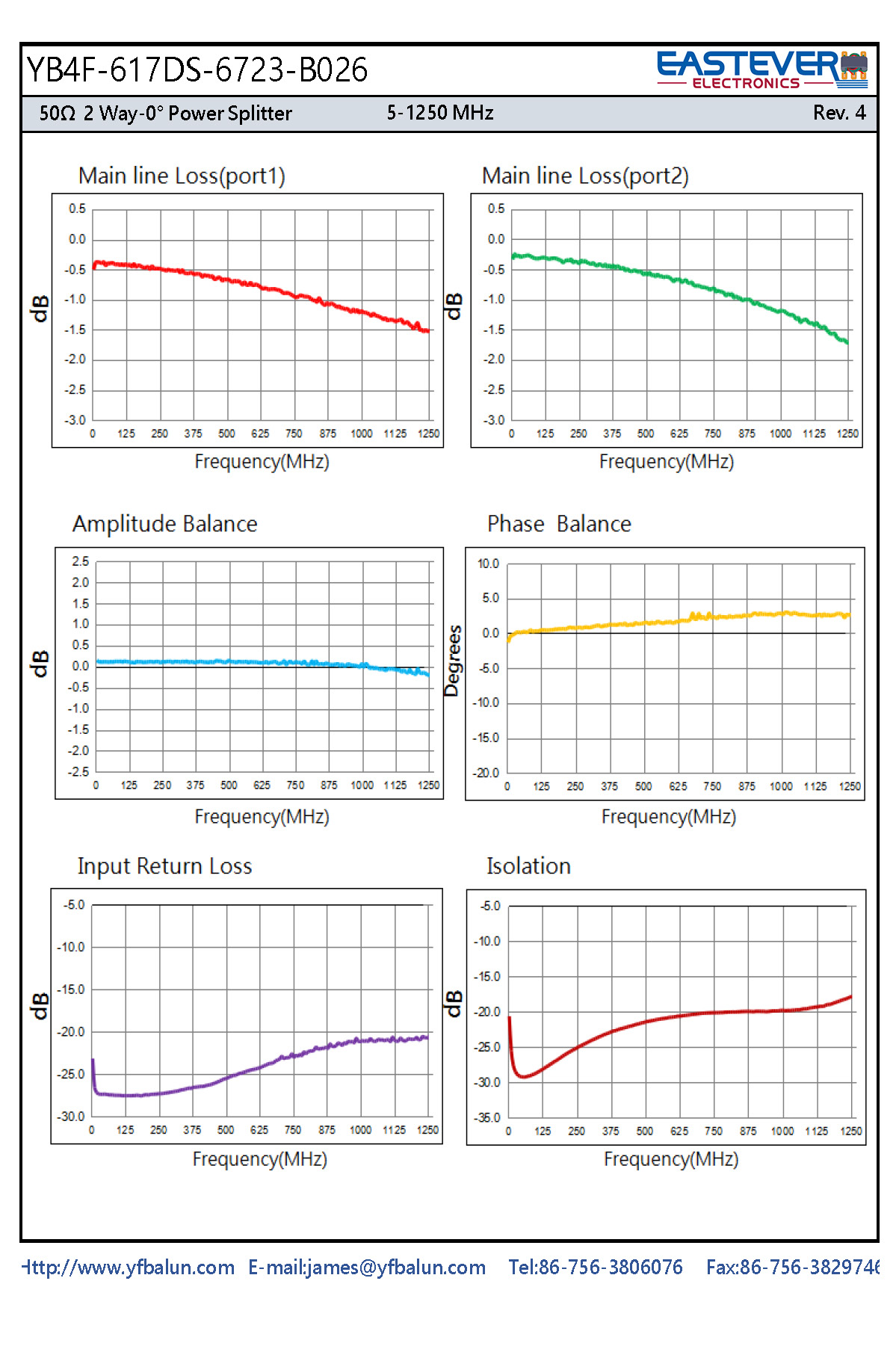
From a design perspective, baluns can be broadly classified into two categories: lumpedelement baluns and distributedelement baluns. Lumpedelement baluns typically use discrete components such as capacitors, inductors, and transformers to achieve the necessary impedance transformation and mode conversion. These are suitable for lowerfrequency applications or when a compact design is required. However, at microwave frequencies, distributedelement baluns—such as hairpin baluns, coupledline baluns, and quarterwave baluns—are more commonly employed due to their superior performance in terms of bandwidth, efficiency, and miniaturization.
A hairpin balun, for instance, is constructed using a folded transmission line structure, where the signal is fed into a microstrip line that is folded back on itself, creating a balanced configuration. This design is particularly effective in achieving high CMRR and low insertion loss over a wide frequency range, making it a popular choice in RF frontend modules and highspeed data communication systems. According to a study by IEEE Microwave and Guided Wave Letters, hairpin baluns can achieve a CMRR of over 40 dB at frequencies up to 6 GHz, demonstrating their robustness in modern microwave circuits.
On the other hand, coupledline baluns rely on the coupling between two parallel transmission lines to achieve mode conversion. These baluns are widely used in microwave integrated circuits (MICs) and monolithic microwave integrated circuits (MMICs) due to their compatibility with planar fabrication techniques. The coupledline balun's performance is highly dependent on the coupling coefficient and the line dimensions, and optimizing these parameters is key to achieving the desired impedance transformation and bandwidth. Industry data from Keysight Technologies indicates that coupledline baluns can offer a CMRR of up to 30 dB with minimal insertion loss, depending on the coupling level and dielectric constant of the substrate.
Designing a balun for microwave applications involves careful consideration of several factors, including the operating frequency range, power handling capability, and thermal stability. At higher frequencies, parasitic effects and radiation losses become more pronounced, which can degrade the balun's performance. Therefore, advanced design techniques, such as evenodd mode analysis, are often employed to model and optimize the balun’s behavior. Evenodd mode analysis helps in understanding the differential and commonmode responses of the balun by assuming the two lines are either inphase (even mode) or outofphase (odd mode). This method is particularly useful in the design of transformerbased baluns, which are known for their high CMRR and wide bandwidth.
One of the most common transformerbased balun designs is the quarterwave transformer balun, which uses a single transmission line of a quarterwavelength length to achieve impedance matching and mode conversion. This type of balun is simple to implement and offers excellent performance in terms of phase balance and impedance transformation. However, its bandwidth is limited by the physical dimensions of the transmission line, and it is typically used in applications where a specific frequency is targeted. When designing such baluns, engineers must carefully select the characteristic impedance of the transmission line and the coupling between the balanced and unbalanced ports to ensure optimal performance.
In recent years, the demand for highperformance baluns has increased due to the growing complexity of microwave circuits in 5G, satellite communication, and millimeterwave systems. These applications often require baluns with wide bandwidth, low loss, and high power handling capabilities. To meet these demands, researchers have explored multilayer balun structures, planar baluns, and compact balun designs that integrate with other microwave components. For example, a study published in IEEE Transactions on Microwave Theory and Techniques demonstrated that multilayer baluns can significantly improve the CMRR and reduce losses by leveraging the properties of different dielectric materials and layer configurations.
In addition to their role in impedance matching and mode conversion, baluns also play a key part in noise suppression and signal integrity. In RF frontends, baluns are used to isolate the balanced signal from ground noise and interference, thereby improving the overall system performance. This is especially important in lownoise amplifiers (LNAs), where any commonmode noise can lead to increased noise figure and reduced sensitivity. As a result, the design of baluns must not only focus on electrical performance but also on mechanical and thermal stability to ensure reliability in harsh environments.
The application of balanced to unbalanced baluns extends beyond traditional RF circuits. They are increasingly used in antenna systems to match the impedance between the balanced feed and the unbalanced antenna input, in mixers and modulators to ensure signal symmetry, and in Power Dividers and couplers to manage signal distribution with minimal distortion. In the context of cable television (CATV) and wireless communication systems, baluns are also employed to interface between balanced and unbalanced signal sources, ensuring efficient power transfer and minimizing signal degradation.
As microwave and RF technologies continue to evolve, the design of baluns is becoming more sophisticated. Emerging trends include the integration of baluns with RFICs (RF Integrated Circuits) and SiGebased technologies, as well as the development of miniaturized baluns for use in compact devices such as 5G base stations and satellite transponders. These advancements are driven by the need for higher efficiency, lower cost, and better scalability in highfrequency systems.
In conclusion, the design and application of balanced to unbalanced Rf Baluns are vital to the performance and reliability of modern microwave circuits. With the increasing complexity of RF systems, engineers must employ advanced techniques and materials to ensure that baluns meet the stringent requirements of highfrequency operation. From lumpedelement designs to distributedelement structures, the choice of balun type depends on the specific application, frequency range, and system constraints. As the industry moves toward higher frequencies and more integrated solutions, the role of the balun will only become more critical in achieving optimal signal integrity and system performance.